Exhaust Design Software for Automotive Engineers and Enthusiasts
Designing a vehicle’s exhaust system is far more than bending metal tubes and attaching mufflers. It’s an intricate science that balances performance, acoustics, emissions, and durability. To achieve this precision, exhaust design software has become an essential tool for both professional automotive engineers and car enthusiasts. This technology allows users to simulate airflow, predict sound behavior, and optimize materials and geometry before the first prototype is even built.
In this comprehensive guide, we will explore how exhaust design software works, why it’s crucial in modern automotive engineering, and which features make it indispensable for those who aim to build efficient, quiet, and high-performance vehicles.
The Role of Exhaust Design Software in Automotive Engineering
Exhaust systems are vital components that influence a vehicle’s performance, sound, and environmental impact. Traditionally, engineers relied on manual calculations, physical testing, and countless prototypes to perfect an exhaust layout. However, modern exhaust design software replaces much of this trial-and-error process with advanced computational modeling.
By simulating gas dynamics, thermal behavior, and sound propagation, engineers can analyze how design changes affect backpressure, flow velocity, and sound attenuation. The result is a more efficient process that saves time, reduces costs, and leads to better-performing systems.
For automotive enthusiasts, this software provides an exciting opportunity to experiment with exhaust configurations virtually—whether they are tuning for performance, crafting a unique sound, or improving fuel efficiency.
Key Features of Exhaust Design Software
The most powerful exhaust design software programs include features that streamline every stage of the development process—from concept to validation.
CFD (Computational Fluid Dynamics) Simulation
CFD modeling is the backbone of exhaust system design. It allows engineers to simulate the movement of exhaust gases through the manifold, pipes, and mufflers. By analyzing velocity, temperature, and pressure distribution, engineers can pinpoint inefficiencies and optimize flow paths for maximum performance.
Acoustic Analysis
Sound quality is one of the most defining aspects of an exhaust system. Using acoustic simulation, designers can predict how the exhaust note will sound under different RPM ranges. This feature is especially important for performance vehicles and brands that want to create signature exhaust tones.
Thermal Management
Exhaust gases can reach temperatures above 1000°C, which means thermal management is essential. Software tools help engineers visualize heat distribution and identify areas that require insulation or cooling. Proper thermal analysis ensures reliability and prevents material failure.
Emission Simulation
With global emission standards becoming increasingly strict, it’s vital for engineers to predict how design changes affect pollutant levels. Modern exhaust design software can simulate catalytic converter performance and estimate CO₂, NOx, and particulate emissions.
3D Modeling and CAD Integration
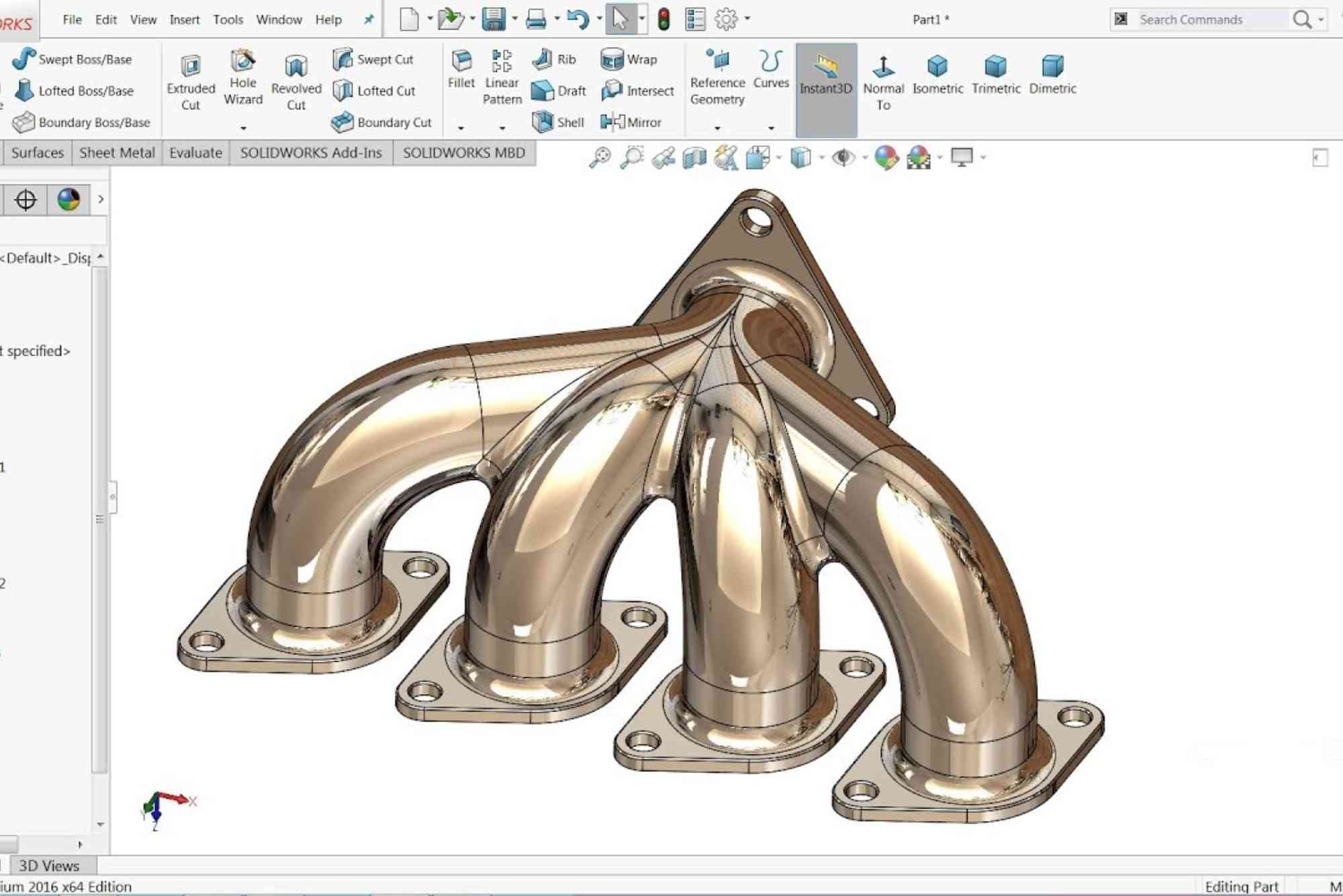
Exhaust design tools often integrate seamlessly with popular CAD programs like SolidWorks, CATIA, and AutoCAD. This allows engineers to design in 3D, visualize components in the vehicle environment, and export files directly for manufacturing or 3D printing.
Flow Optimization
The ideal exhaust system maintains optimal flow with minimal backpressure. Using automated optimization tools, engineers can test hundreds of geometric variations in minutes and select the configuration that provides the best balance of performance and noise reduction.
Benefits of Using Exhaust Design Software
The adoption of exhaust design software provides measurable advantages for both professional teams and independent developers.
Enhanced Performance Prediction
Through simulation, engineers can predict how an exhaust design will perform in real-world conditions without fabricating a single part. This predictive capability allows for smarter design decisions and performance tuning.
Cost and Time Efficiency
Traditional design processes often involve multiple prototype iterations. Virtual modeling drastically reduces these cycles, cutting costs and accelerating time-to-market for new vehicle models.
Improved Accuracy and Consistency
Manual calculations are prone to errors, especially when dealing with complex exhaust geometries. Software-based modeling ensures accuracy and repeatability, making it easier to meet regulatory standards and performance goals.
Customization for Enthusiasts
Car enthusiasts can use exhaust design software to craft personalized exhaust setups that reflect their driving style. Whether you want a deep rumble or a sharp racing tone, these tools help you visualize and fine-tune the results.
Sustainability and Compliance
With sustainability at the forefront of the automotive industry, simulation tools play a major role in designing eco-friendly exhausts. By modeling emission control systems, engineers can meet regulatory requirements while maintaining engine efficiency.
Popular Exhaust Design Software Used Today
While there are several platforms available, some have become industry favorites due to their precision, ease of use, and powerful features.
AVL BOOST
AVL BOOST is one of the most advanced one-dimensional simulation tools for internal combustion engine systems, including exhausts. It helps engineers model gas exchange, acoustics, and after-treatment processes in detail.
Ricardo WAVE
Ricardo WAVE is widely used for simulating engine breathing and exhaust acoustics. Its flexibility makes it ideal for research and development in performance and emission reduction.
GT-Power
GT-Power by Gamma Technologies is a comprehensive solution for engine and exhaust simulation. It supports multi-physics analysis, from combustion to sound radiation, and is commonly used by leading automotive manufacturers.
Ansys Fluent
Ansys Fluent provides high-end CFD capabilities for exhaust flow, thermal, and acoustic analysis. It is often used in conjunction with CAD modeling software for complete system integration.
SolidWorks Flow Simulation
For users already working within SolidWorks, the integrated flow simulation module offers a user-friendly way to test exhaust flow and thermal behavior in 3D environments.
How Automotive Engineers Use Exhaust Design Software
Automotive engineers rely on these programs throughout the design cycle. It begins with concept development, where rough geometries are modeled. Next, simulations test airflow, temperature, and acoustics under different engine speeds. Engineers then refine the design to reduce backpressure, manage noise, and ensure compliance with emission regulations.
Once virtual validation is complete, physical prototypes are built for final testing. Because most design flaws are identified in the software stage, prototypes are usually much closer to production quality.
How Enthusiasts Benefit from Exhaust Design Software
For car enthusiasts, exhaust design software opens doors that were once reserved for professionals. Many programs now offer simplified interfaces that allow hobbyists to visualize airflow, sound output, and backpressure.
Enthusiasts can model custom exhausts for racing, off-roading, or show cars and use 3D printing or fabrication services to bring their digital designs to life. The software’s ability to predict sound and performance makes customization safer, smarter, and more rewarding.
Future Trends in Exhaust Design Software
As automotive technology evolves, exhaust design tools are becoming more intelligent and integrated with broader vehicle simulation systems. Artificial intelligence and machine learning are being used to automate optimization tasks, reducing manual intervention.
Cloud-based collaboration is another trend, allowing teams around the world to work on the same design simultaneously. Furthermore, electric and hybrid vehicles have shifted the focus toward sound design—creating artificial exhaust tones that enhance driver engagement.
In the future, exhaust design software will play an even greater role in helping manufacturers meet global emissions standards while maintaining brand-specific acoustic identities.
Whether you’re an automotive engineer developing next-generation vehicles or an enthusiast fine-tuning your dream car, exhaust design software is a game-changer. It allows you to visualize, simulate, and perfect exhaust systems before fabrication, saving both time and resources. By combining fluid dynamics, acoustics, and thermal analysis, these tools help you build systems that perform better, sound sharper, and meet global environmental standards.
FAQs
What is exhaust design software used for?
Exhaust design software is used to simulate and optimize the performance, acoustics, and emissions of a vehicle’s exhaust system before production.
Can car enthusiasts use exhaust design software at home?
Yes, several user-friendly tools are available for enthusiasts that provide simplified simulations and visualization of exhaust performance.
Does exhaust design software require CAD experience?
Not always. While professional engineers benefit from CAD integration, many modern tools include intuitive interfaces that don’t require advanced CAD skills.
How accurate are exhaust simulations?
When provided with correct input data, simulations can achieve up to 95% accuracy in predicting airflow, temperature, and sound levels.
Is exhaust design software expensive?
Professional-grade tools can be costly, but affordable or even free educational versions are often available for students and hobbyists.