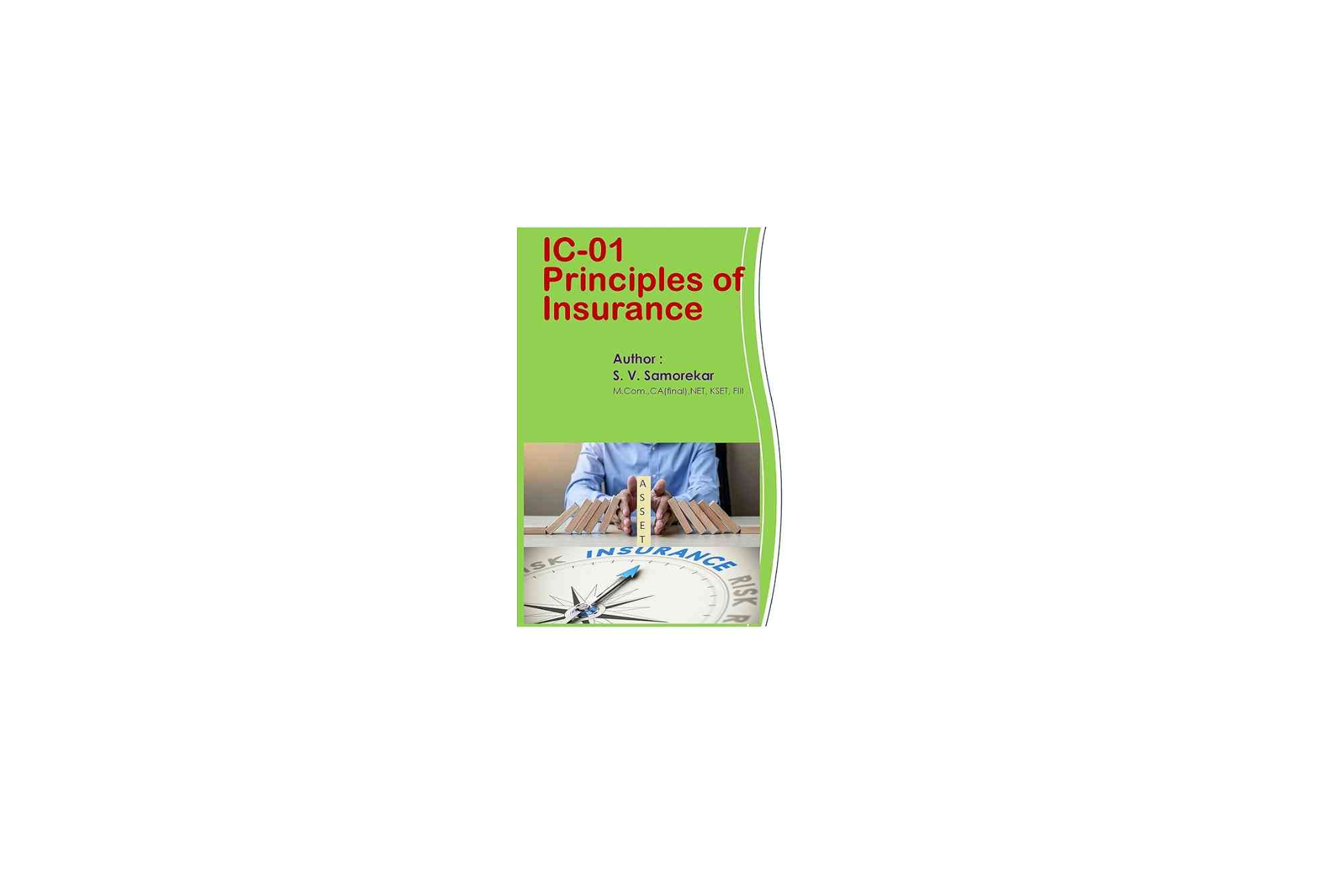
IC 01 Principles of Insurance Book Summary
The IC 01 Principles of Insurance book is a foundational text for anyone entering the insurance field. Whether preparing for professional exams, working in insurance operations, or simply seeking to understand how insurance works, this summary provides an overview of the main themes of the book, how they connect, and why they matter.
Introduction
Insurance impacts almost every aspect of modern life, yet few people truly understand how it functions. The IC 01 Principles of Insurance book addresses this by explaining what insurance is, why it is necessary, and how it operates. Readers encounter concepts such as risk, peril, hazard, underwriting, claims, and the legal contract that governs them all. This summary condenses those concepts to help learners grasp essential ideas efficiently.
What is Insurance?
Definition and Function
Insurance is defined as a contract in which an insurer, for a consideration called a premium, agrees to compensate the insured for losses arising from specified perils. Each element of this definition—contract, consideration, compensation, insured peril—reveals part of how insurance operates. Insurance functions as a loss‑sharing mechanism where many individuals or entities contribute premiums, and only a few experience actual losses. The insurer compensates those losses using pooled funds.
Why Do We Need It?
Insurance provides protection and financial stability by allowing individuals and businesses to mitigate losses they cannot easily absorb, such as fire, flood, or liability. It supports credit and lending by reducing exposure to risk. Additionally, the pooling of risks combined with the law of large numbers allows insurers to predict losses accurately, ensuring the financial system’s stability.
Core Concepts: Risk, Peril, and Hazard
Risk Defined
Risk is the possibility of an adverse deviation from expected financial outcomes. Only pure risks, which involve potential loss without any chance of gain, are insurable. Speculative risks, which may result in either loss or gain, are not suitable for insurance coverage.
Peril and Hazard
A peril is the actual cause of a loss, such as fire, theft, or natural disaster. A hazard is a condition that increases the likelihood or severity of a loss, such as faulty wiring or unstable structures. Understanding the difference is crucial for underwriting and loss assessment.

Insurability of Risk
Not every risk can be insured. The IC 01 book outlines the characteristics of insurable risks: a large number of similar exposures, independence among units, predictable financial outcomes, accidental and fortuitous nature, and limited catastrophic potential.
Principles of Insurance
The book emphasizes several fundamental principles that guide all insurance contracts and operations:
Principle of Insurable Interest
The insured must have a financial interest in the subject matter. In life insurance, this interest must exist at the time of the contract; in non-life insurance, it must exist both at inception and at the time of loss. Without insurable interest, a contract is void.
Principle of Indemnity
Non-life insurance aims to restore the insured to the same financial position they were in before the loss, preventing profit from the insurance payout. Life insurance is an exception, as indemnity cannot be applied to the value of human life.
Principle of Subrogation
After paying a claim, the insurer can recover costs from third parties responsible for the loss. This ensures the insured does not profit twice from the same event and holds responsible parties accountable.
Principle of Contribution
If multiple policies cover the same subject, the insured cannot claim more than the actual loss. Insurers involved can share the claim proportionally, preventing overcompensation.
Principle of Utmost Good Faith
Insurance contracts rely on full disclosure of material facts by the insured. Non-disclosure or misrepresentation can invalidate a policy. Both parties must act honestly and provide all relevant information.
Proximate Cause
Proximate cause determines the dominant cause of loss in a chain of events. If the main cause is excluded in the policy, the claim may be denied. This principle ensures clarity in claims assessment.
Insurance Mechanics: Underwriting, Rating, and Claims
Underwriting and Rating
Underwriting involves evaluating risks and deciding whether to accept or reject coverage. Insurers classify risks, analyze data, and apply pricing models to calculate premiums. Rating considers both frequency and severity of losses to determine fair pricing.
Claims Management
When a loss occurs, the insured must notify the insurer, provide evidence, and allow verification. Claims assessment ensures that coverage applies according to the contract, principles like indemnity are followed, and losses are properly documented. Efficient claims management maintains trust and operational efficiency.
Reinsurance
Reinsurance allows insurers to transfer portions of their risk to other companies. This protects against catastrophic losses and strengthens financial stability, allowing insurers to underwrite larger policies safely.
Legal and Regulatory Framework
Insurance operates under strict legal and regulatory guidelines. These regulations ensure solvency, consumer protection, licensing, and compliance with contract law. Policies must conform to legal requirements, including the validity of the contract, insurable interest, and adherence to public policy.
Why This Book Matters for the Exam and Profession
For students preparing for the IC 01 exam or similar certifications, the IC 01 Principles of Insurance book is essential. It provides the terminology, principles, mechanics, and context necessary for a solid understanding of insurance. Professionals also benefit, gaining insight into ethical conduct, underwriting decisions, claims handling, and operational principles. Mastery of this book’s content supports careers as agents, brokers, underwriters, or claims assessors.
Practical Applications
The book’s concepts translate directly into real-world scenarios:
- Policyholders understand the importance of full disclosure and the reasons claims may be denied.
- Insurance professionals can segment risks, price products accurately, and assess claims responsibly.
- Risk managers learn to combine insurance with other risk mitigation strategies, like avoidance and retention, for comprehensive risk management.
Summary of Key Chapters
- Introduction to Insurance: Overview of definition, need, and mechanism.
- Risk, Peril, Hazard, and Classification: Understanding insurable exposures.
- Pricing of Insurance Products: How premiums are calculated using data and analysis.
- Principles of Insurance: Detailed discussion of insurable interest, indemnity, subrogation, contribution, utmost good faith, and proximate cause.
- Legal Aspects: Contract law, regulation, and policy requirements.
- Underwriting and Claims: Risk assessment, policy issuance, and claim settlement.
- Reinsurance and Insurance Accounts: Managing large-scale risk and financial reporting.
The IC 01 Principles of Insurance book offers a thorough roadmap to understanding insurance, risk, and contractual obligations. Whether for exam preparation or professional development, mastering its content is crucial. To deepen your knowledge, study the full book, practice with case studies, and engage with real-world insurance examples. Obtain the IC 01 Principles of Insurance book and work through its chapters thoroughly. Apply the principles to practical scenarios, join study groups, and revisit summaries to strengthen your understanding. Mastery of these concepts will boost your confidence and professional capability in the insurance industry.
FAQ
What is the IC 01 exam?
It is the module “Principles of Insurance” offered by insurance institutes as part of the Licentiate certification.
Can life insurance policies follow the principle of indemnity?
No, because indemnity cannot be applied to human life, life insurance operates differently from non-life policies.
Why are speculative risks not insurable?
Speculative risks include potential gain, which is unpredictable. Only pure risks with possible financial loss are insurable.
How does the law of large numbers apply to insurance?
The law states that as the number of similar exposures increases, the actual results approach expected outcomes, aiding in premium calculation and risk assessment.
What should a student focus on when reading the IC 01 book?
Key definitions (risk, peril, hazard), principles (insurable interest, indemnity, etc.), and understanding how underwriting, rating, claims, and regulation interconnect in practical scenarios.