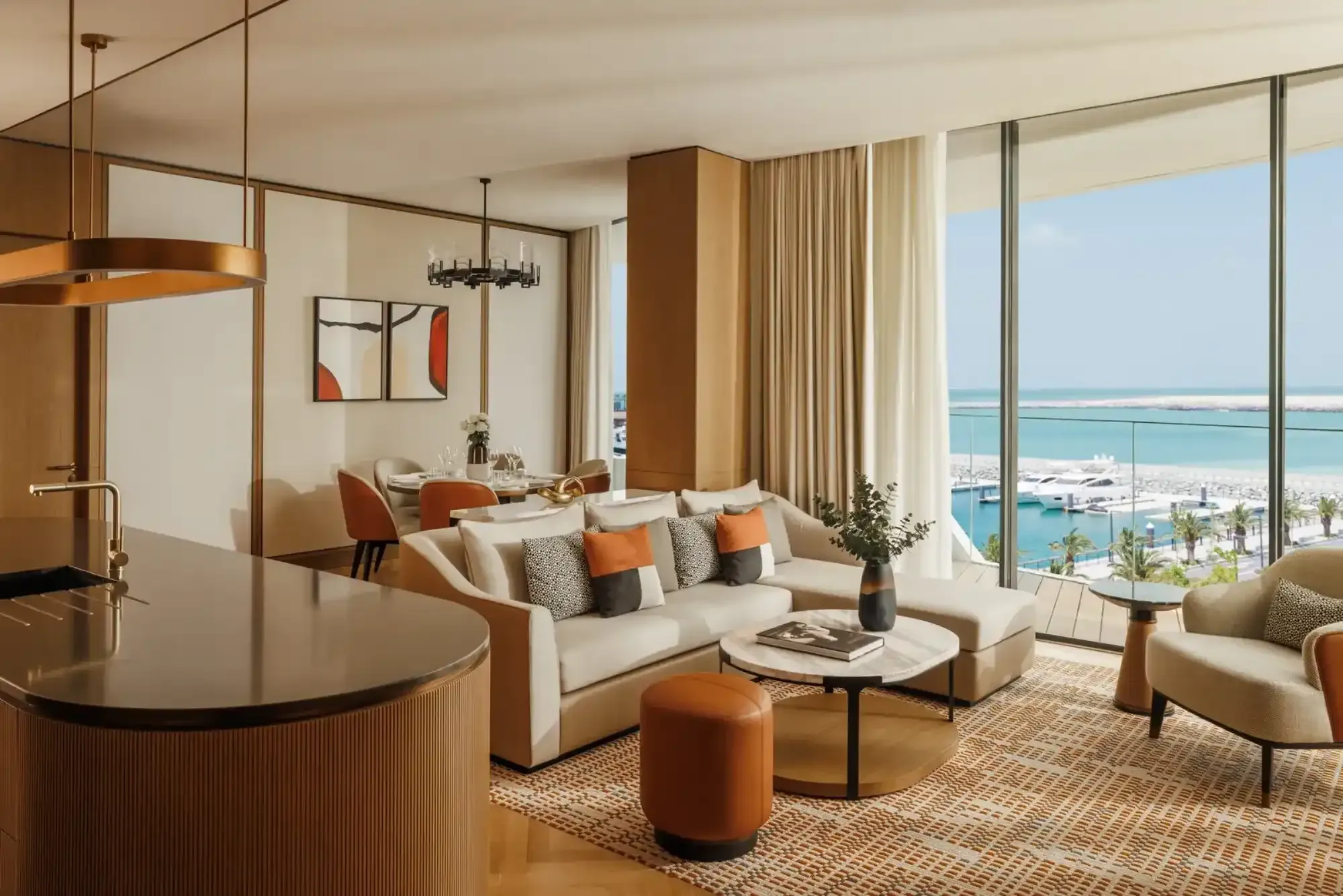
The design principles behind memorable hotel and restaurant experiences — and how they are
being applied across Dubai and the wider UAE.
The UAE’s hospitality sector is one of the most competitive design environments in the world.
Dubai alone hosts a concentration of internationally branded luxury hotels that would be
remarkable in any global city, and the standard of design expected by both operators and
guests has risen consistently alongside that concentration. In this context, what separates
memorable architecture design Dubai from merely excellent hospitality space is worth
examining in detail.
What Guests Actually Remember
Hospitality design research consistently finds that guests’ strongest memories of a space are
not of the elements that received the largest specification budget. They remember how the
space made them feel — the quality of light in the lobby at a specific time of day, the acoustic
character of a restaurant that allowed conversation without effort, the resolution of a threshold
between interior and exterior that felt inevitable rather than arbitrary.
The implication for designers is that the hierarchy of decisions in hospitality design does not
follow the hierarchy of specification costs. A well-resolved plan — where the arrival sequence,
circulation, and relationship between public and private areas are coherent — creates more
lasting guest satisfaction than the most expensive imported stone applied to a spatially
confused layout.
The UAE Context: Climate, Culture, and Expectation
“The best hospitality spaces in Dubai do not feel like they could be
anywhere. They feel like they could only be here.”
Hospitality design in the UAE operates within a specific cultural and climatic context that the
most effective spaces acknowledge directly. The relationship to outdoor space — generous in
the cooler months, necessarily curated in summer — requires an architectural solution rather
than a furniture arrangement. The cultural emphasis on privacy gradients between public,
semi-public, and private spaces shapes the planning logic of hotels and restaurants in ways
that differ meaningfully from European or American equivalents. A practice grounded in the
UAE context brings this knowledge as a design resource rather than a constraint.

F&B; Design: Where Commercial Performance Meets Spatial Experience
Restaurant and cafe design in Dubai is a particularly demanding brief. The space must deliver
a commercial return — table turns, revenue per square metre, operational efficiency behind the
pass — while creating an experience that justifies the guest’s presence when they have access
to dozens of comparable alternatives. These requirements are not in conflict, but resolving
them requires a design approach that begins with operational logic rather than visual concept.
The floor plan, the acoustic treatment, the lighting strategy — these must serve the service
model before they serve the brand identity.
Boutique Hotel Design: The Case for Spatial Character
Dubai’s hotel market has historically been dominated by large-format, internationally branded
product. The boutique hotel sector — smaller in scale, with a stronger individual identity and a
more specific guest profile — is growing as both a development category and a demonstrated
guest preference. Boutique hotels are the most architecturally demanding hospitality brief: the
design must create character and a sense of place that functions as the primary brand value.
View Teal Design projects in the hospitality sector to understand how spatial identity is built at
an architectural scale rather than through surface application alone.
Related Reading: Baku Tour Package from Dubai – Best Azerbaijan Holiday Deals — full guide