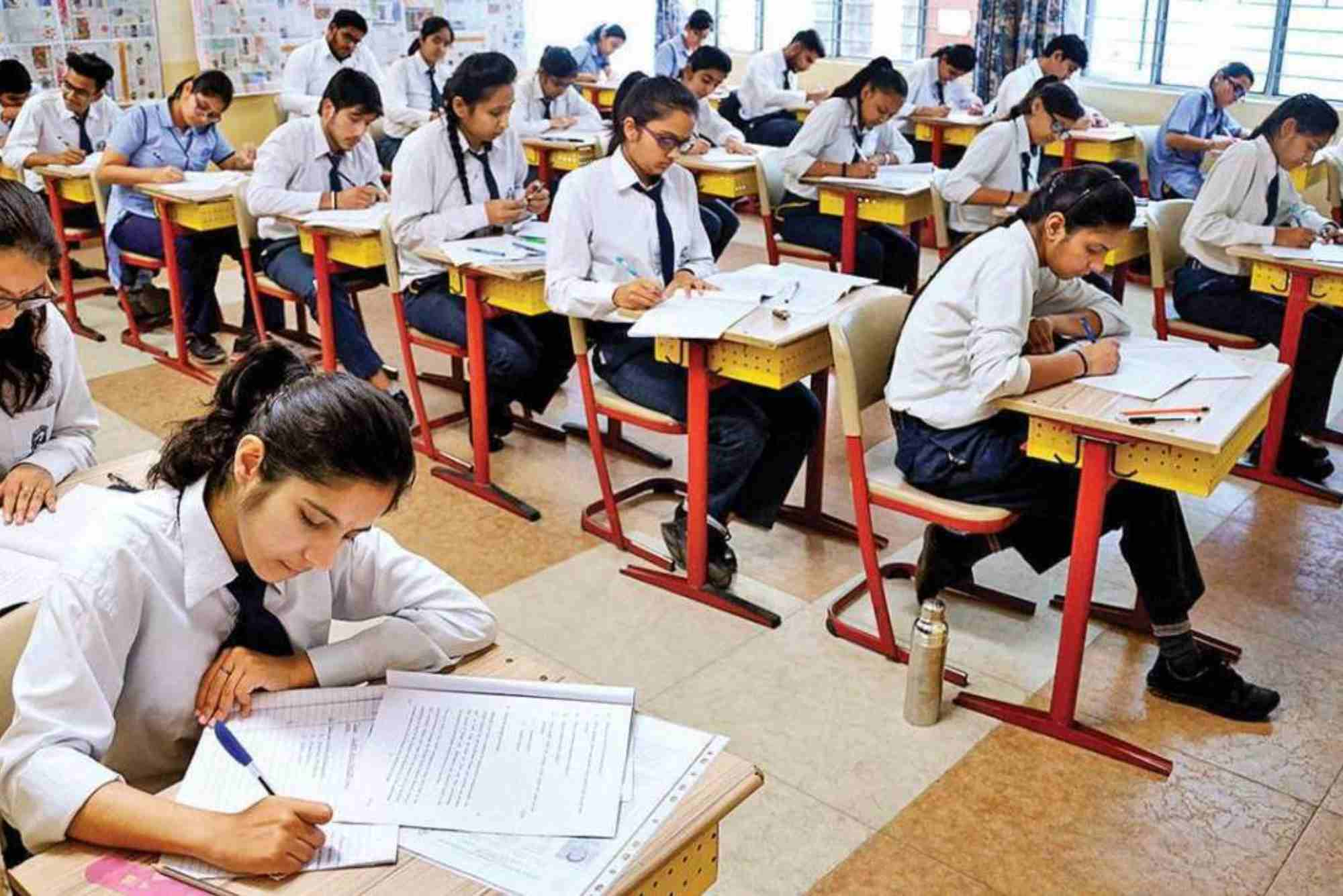
CBSE Exam Class 12 2019 Paper Insights and Analysis
The CBSE Exam Class 12 2019 marked a significant academic milestone for lakhs of students across India. Every year, the Central Board of Secondary Education (CBSE) conducts Class 12 exams to evaluate students’ understanding of concepts learned throughout their senior secondary education. The 2019 examination papers reflected a blend of conceptual clarity, analytical reasoning, and application-based learning, aligning with CBSE’s vision of holistic education. In this comprehensive analysis, we will explore subject-wise insights, difficulty levels, key changes, student reactions, and preparation tips inspired by the 2019 papers to help future aspirants.
Overview of CBSE Exam Class 12 2019
The CBSE Exam Class 12 2019 was conducted in March, with over 12 lakh students appearing from across the country. The exams covered all major streams including Science, Commerce, and Humanities. CBSE introduced slight structural changes in question papers to make them more application-oriented. The aim was to test students’ conceptual knowledge rather than rote memorization. The 2019 papers also followed the new marking scheme emphasizing stepwise evaluation and clarity of presentation. Students found this reform student-friendly and fair.
Subject-Wise Analysis of CBSE Class 12 2019 Papers
Science Stream Analysis
In the Science stream, Physics, Chemistry, and Mathematics papers were most discussed due to their analytical nature.
Physics Paper Analysis
The Physics paper of CBSE Exam Class 12 2019 was moderately difficult. It focused heavily on conceptual understanding and numericals rather than direct textbook questions. Topics like Current Electricity, Ray Optics, and Communication Systems carried higher weightage. Students who practiced NCERT-based derivations and numerical problems performed well. Some sections required a deep understanding of formula application, but the paper was balanced overall.
Chemistry Paper Analysis
The Chemistry paper was a relief for many students. It was considered easy to moderate with a strong NCERT base. Physical Chemistry involved simple calculations, while Organic Chemistry had predictable reaction mechanisms. Inorganic Chemistry focused on direct questions from NCERT examples and exercises. Students appreciated that the question paper avoided unnecessary complexity and rewarded conceptual clarity.
Mathematics Paper Analysis
The Mathematics paper was considered one of the toughest in recent years. Many students found the CBSE Exam Class 12 2019 Mathematics paper lengthy and time-consuming. Sections involving calculus and probability were challenging, especially for average scorers. Despite the difficulty, the paper maintained fairness in coverage across the syllabus. Students who had solved sample papers and previous years’ papers were able to manage time better and score decently.
Commerce Stream Analysis
For Commerce students, Accountancy, Business Studies, and Economics papers determined the overall performance.
Accountancy Paper Insights
The Accountancy paper was balanced with both theoretical and practical questions. The CBSE Exam Class 12 2019 Accountancy paper tested accuracy and understanding of concepts like Partnership Accounts, Financial Statements, and Cash Flow Analysis. Numerical questions required precision, but overall, the paper followed NCERT guidelines closely. Students appreciated the fair marking scheme and predictable pattern.
Business Studies Paper Analysis
The Business Studies paper was well-received for its simplicity and clarity. It focused on case-based questions and real-life applications of management principles. Topics like Planning, Organizing, and Leadership carried significant weight. Most students reported that they could complete the paper comfortably within the time limit.
Economics Paper Analysis
The Economics paper maintained a moderate difficulty level. The question distribution between Microeconomics and Macroeconomics was balanced. Some numerical questions in the National Income and Money & Banking sections were tricky. However, conceptual questions from NCERT helped high scorers perform exceptionally well.
Humanities Stream Analysis
Students in the Humanities stream found a mix of easy and moderately difficult questions across subjects like Political Science, History, Geography, and English Core.
English Core Paper Review
The CBSE Exam Class 12 2019 English Core paper was student-friendly, focusing on reading comprehension and writing skills. Grammar questions followed a familiar pattern. The literature section was straightforward, emphasizing textual understanding and interpretation. Most students rated it as easy to moderate.
History and Political Science Insights
The History paper tested factual accuracy and interpretation of sources, while Political Science had analytical questions on contemporary politics and governance. Students found the paper engaging but required strong writing and time management skills to complete it effectively.
Difficulty Level and Trends Observed
The overall difficulty level of the CBSE Exam Class 12 2019 papers ranged from easy to moderate, with a few challenging sections in subjects like Mathematics and Physics. The trend showed a clear shift toward conceptual and analytical learning. CBSE’s intention was to reduce dependence on rote memorization and encourage critical thinking. Most subjects adhered to the NCERT framework, which rewarded students who studied systematically throughout the year.
Changes and Innovations in 2019 Exam Pattern
CBSE introduced a few key updates in 2019 to make the exams more student-oriented. The major change was the emphasis on internal assessment and project work. For most subjects, 20% marks were reserved for internal evaluation, encouraging practical learning. The question papers included more short-answer and application-based questions, especially in Science and Commerce subjects. Moreover, the marking scheme became more transparent, and answer sheets were evaluated with strict stepwise marking to ensure fairness.
Student and Teacher Reactions
Teachers generally praised the CBSE Exam Class 12 2019 for maintaining academic standards and aligning questions with the NCERT syllabus. Students expressed mixed reactions. While some appreciated the balance and predictability of the papers, others, especially from the Science stream, found certain papers too lengthy. Many reported that practice from sample papers, NCERT exemplars, and mock tests was the key to success.
Key Lessons from CBSE Exam Class 12 2019 for Future Students
The 2019 exams offered several valuable lessons for future aspirants. The first and foremost lesson was the importance of conceptual clarity. Students who merely memorized textbook lines struggled with application-based questions. Secondly, time management emerged as a critical skill, especially for lengthy papers like Mathematics and Physics. Regular practice and solving previous year question papers proved to be the most effective strategy. Lastly, maintaining neat presentation and clear stepwise solutions helped secure better marks.
Preparation Tips Based on 2019 Insights
Drawing from the experiences of the CBSE Exam Class 12 2019, students can follow these practical preparation strategies:
Focus on NCERT textbooks as the foundation of study. Nearly 80–85% of questions were directly or indirectly from NCERT.
Practice previous year question papers to understand the pattern, difficulty, and time requirement.
Allocate daily time to revision and conceptual learning instead of rote memorization.
Use sample papers and mock tests to simulate exam-like conditions.
Develop time management skills by solving full-length papers within the given time limit.
For numerical subjects, emphasize accuracy and stepwise presentation to maximize marks.
Role of CBSE’s Assessment Policy
CBSE’s 2019 examination policy aimed to promote fairness and transparency. The marking scheme encouraged partial credit for correct steps even if the final answer was incorrect. This change significantly benefited students in numerical subjects. Additionally, the focus on internal assessments helped balance theoretical learning with practical understanding. These initiatives reflected CBSE’s goal to make exams more skill-oriented and less stressful.
How the 2019 Exams Influenced Future Patterns
The CBSE Exam Class 12 2019 served as a turning point for future exam reforms. It paved the way for competency-based questions and case-study formats introduced in later years. The shift from rote learning to understanding-based evaluation became more evident. Many educators consider 2019 as the foundation year for CBSE’s new assessment vision that emphasizes holistic development, logical reasoning, and real-life application of knowledge.
Common Challenges Faced by Students
Despite improvements, students faced challenges such as lengthy question papers, tricky numericals, and time constraints. In subjects like Mathematics and Physics, several students reported running out of time due to complex problem-solving. Humanities students found some analytical questions open-ended, requiring detailed answers within limited time. Overcoming such challenges requires consistent practice, proper planning, and stress management techniques.
The CBSE Exam Class 12 2019 highlighted the importance of understanding over memorization. It reflected CBSE’s commitment to evolving academic standards and preparing students for higher education and competitive exams. For future aspirants, studying the 2019 papers provides valuable insight into question trends, difficulty levels, and time management strategies. By focusing on conceptual clarity, regular revision, and disciplined practice, students can confidently face upcoming exams. If you are preparing for the next CBSE Class 12 exams, start your journey by analyzing past papers like the 2019 set. Learn from patterns, master NCERT, and stay consistent. Visit official CBSE resources or trusted educational platforms to access study material, marking schemes, and expert guidance. Preparing smartly today will shape your success tomorrow.
FAQs
1. Was the CBSE Exam Class 12 2019 tough?
The overall difficulty level was moderate. While Mathematics and Physics were challenging, other subjects like Chemistry, English, and Business Studies were easier.
2. What was new in the CBSE Class 12 2019 exam pattern?
CBSE introduced more application-based questions and allocated 20% marks for internal assessment in several subjects.
3. How were CBSE Class 12 2019 papers evaluated?
Evaluation followed stepwise marking, allowing students to earn partial credit for correct steps or logic even if the final answer was wrong.
4. Which subject was considered the toughest in 2019?
Most students found the Mathematics paper the toughest due to lengthy and complex questions.
5. How can students prepare effectively using 2019 papers?
Students can use the 2019 question papers for practice, identify commonly asked patterns, and focus on NCERT-based preparation.