Goan Fruit Names You’ve Probably Never Heard Before
When most people think of Goa, they picture golden beaches, vibrant music, and Portuguese-influenced cuisine. But few realize that this coastal paradise is also home to some of the most unique tropical fruits found in India. While mangoes, coconuts, and bananas are common throughout the country, there’s a long list of lesser-known fruits growing in the backyards of Goan homes, forest edges, and village farms
Goa’s warm, humid climate and fertile soil support an incredible range of fruit species, many of which are not cultivated commercially, but passed down through generations of local communities. These fruits not only reflect Goa’s rich biodiversity but also highlight the deep-rooted traditions of using natural resources for health and nutrition. Some of them are wild, some are seasonal, and some are considered medicinal treasures. What’s fascinating is that many Goan fruits have no direct counterparts in English or even in other Indian languages. They carry local Konkani or Portuguese names, making them even more mysterious to outsiders. This lack of widespread recognition has meant that these fruits remain hidden gems — shared between neighbors, sold in weekly village markets, or foraged from the forest floor.
The Forgotten Forest Fruits of Goa
Among the most intriguing categories of Goan fruits are those found in the wild — typically in wooded areas or near village groves. These are often seasonal, not widely cultivated, and known mostly to locals.
Kanttam or Wild Hog Plum
Locally called Kanttam, this fruit resembles a small green mango but is usually much more sour. It grows wild and is used in pickles or chutneys for its tart flavor. Villagers collect these from forest areas during the monsoon. Rich in vitamin C, it’s also used in home remedies for cold and digestive issues.
Bhinnem or Rose Apple
Bhinnem is a pear-shaped, bell-like fruit with a juicy, watery bite and subtle rose fragrance. Pinkish-red in color, it’s incredibly refreshing and loved by kids in Goan households. It’s mostly eaten raw or sprinkled with salt and chili powder.
Karen or Wild Carissa
This small, thorny fruit is often purple when ripe and has a sweet-tart flavor. Goans love turning Karen into syrups or seasonal wines, especially around summer. It’s a rich source of antioxidants and used in traditional medicine to cool the body.

Randonnem or Wild Mangosteen
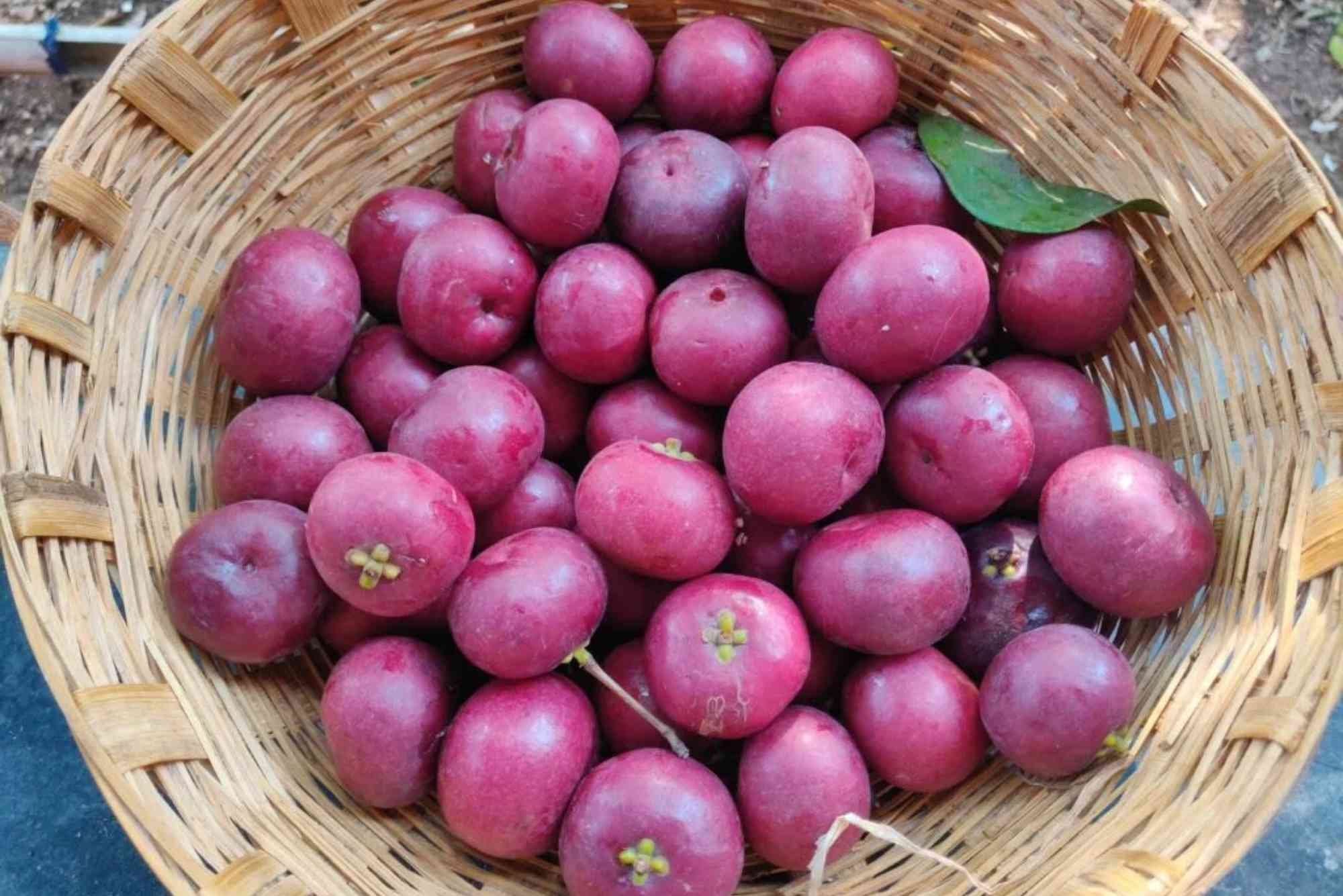
Also known locally as Bindh, the wild mangosteen is a dark purple fruit with a white, tangy pulp. It’s hard to find in markets but a beloved forest fruit among villagers. Known for its medicinal properties, it’s said to help treat ulcers and skin issues.
Backyard Botanicals You Didn’t Know Existed
Goa’s backyard gardens often feature fruit trees that aren’t commonly grown elsewhere. Some are remnants of Portuguese horticulture, while others are native to the Konkan belt.
Bimbal or Tree Sorrel
A small, green, star-shaped fruit used mostly in Goan curries, bimbal (or Bimbli) has a sharp sourness. Unlike tamarind or kokum, it gives a different kind of tang and is used in fish or pork dishes for flavor and texture. It’s also pickled or sun-dried for later use.
Ambade or Hog Plum
A fruit that grows during the monsoon and is extremely sour when raw, Ambade is pickled or turned into spicy jams. With a smooth yellow skin when ripe, it’s fibrous and juicy inside. The seed is large, and the pulp clings to it — making it a fun fruit to suck on.
Churna or Star Gooseberry
This fruit grows in clusters and is extremely tart. It’s eaten raw with salt or used to make squashes, jams, or cooling drinks. Its vitamin C content is exceptionally high, and it’s often used in Ayurvedic blends and homemade tonics.
Kokum or Garcinia Indica
Perhaps the most famous of the lesser-known Goan fruits, Kokum is a souring agent used widely in fish curries. The dried rind is also used to make kokum juice, a popular summer beverage known for its cooling properties. The fruit contains hydroxycitric acid, which aids in digestion and weight control.
The Sweet and Strange Tropical Delights
Some fruits found in Goa stand out not for their medicinal use or sour flavor, but for their unusual sweetness, shape, or texture. They are often enjoyed fresh and are available only during short harvest periods.
Jambul or Jamun
Though known in other parts of India, Jamun has a strong presence in Goan rural areas, especially in summer. Its deep purple color stains the tongue, and its sweet-astringent flavor is loved by both children and adults. It’s often eaten with a sprinkle of salt and is said to be excellent for blood sugar control.
Sansaav or Cashew Apple
Everyone knows Goa is famous for its cashew nuts, but the fruit attached to the nut — the Cashew Apple — is just as interesting. It’s juicy, slightly astringent, and used to make feni, the local liquor. Fresh cashew apples are also turned into jams and vinegar.
Madd or Monkey Fruit
This large, brownish fruit with a hard outer shell hides a custard-like pulp with a strong aroma. Known as Madd, it’s eaten fresh or used in seasonal sweets. The taste is rich and earthy, and it’s considered a delicacy among those who know how to eat it.
How Goans Use These Rare Fruits
Goan cuisine isn’t just about seafood or Portuguese-inspired dishes — these rare fruits are a core part of everyday life. Locals use them in multiple ways, often according to season and purpose. For example, Bimbli or Ambade might feature in monsoon-time fish curries or chutneys, while Karen and Bhinnem are enjoyed as summertime snacks. Kokum and Churna are brewed into cooling beverages or added to gravies. Fruits like Madd are reserved for desserts or ceremonial offerings.
Most interestingly, many of these fruits are preserved. Pickling, sun-drying, or turning them into squashes allows Goans to enjoy seasonal produce year-round. This traditional knowledge helps sustain local diets and reduces reliance on imported or mass-produced foods.
Why These Fruits Are Disappearing
Unfortunately, with rapid urbanization, modern agriculture, and changes in taste preferences, many of these Goan fruits names are fading into obscurity. Younger generations may not recognize Randonnem or Kanttam, while market forces favor cash crops like banana and papaya over native wild fruits.
Conservationists and food activists are now working with local farmers and foragers to preserve these species. Encouraging community gardens, promoting eco-tourism focused on fruit trails, and documenting local names are ways to keep these rare fruits alive — not just in memory but in soil and tradition.
Rediscover Goa Through Its Forgotten Fruits
Goa is more than a beach destination. It’s a living ecosystem with centuries-old food traditions that include some of the most fascinating and underappreciated fruits in India. From wild berries and tart forest plums to backyard delicacies and medicinal treasures, the Goan fruit landscape is full of surprises.
If you ever visit a Goan market or a rural home, don’t hesitate to ask about the strange fruit on the windowsill or the sour berry in the pickle jar. You might just discover a new favorite — and help revive interest in fruits that deserve a comeback. Have you tried any of these Goan fruits? Share your experience in the comments, or tag us on social media with photos from your own fruit discoveries in Goa.
FAQs
What are some traditional Goan fruits not found elsewhere?
Fruits like Bimbli, Karen, Randonnem, and Madd are native or culturally specific to Goa and rarely found in other Indian regions.
What is the Goan name for wild mangosteen?
It’s locally called Randonnem or Bindh. It grows in forested areas and is prized for its tangy pulp.
What is Bimbli used for in Goan cooking?
Bimbli is a sour fruit used in curries, chutneys, and pickles. It’s especially common in fish dishes due to its acidic properties.
Is Kokum the same as tamarind?
No, although both are souring agents. Kokum has a more fruity, floral sourness and is used for its cooling effects, while tamarind is more commonly used across India.
Why are these Goan fruits lesser-known?
Many of these fruits grow seasonally, are not cultivated on a commercial scale, or are limited to specific local communities and forest regions.