Opposed Piston Engine: A Revolutionary Design in Engine Technology
The world of engine design has seen remarkable innovations over the last century, but few concepts have drawn as much attention as the opposed piston engine. This unique engine configuration stands out for its efficiency, compactness, and mechanical simplicity. Unlike traditional engines, which use a cylinder head and a single piston per cylinder, the opposed piston engine uses two pistons moving in opposite directions within a single cylinder. This design eliminates the need for cylinder heads, improving combustion efficiency and reducing heat loss.
The opposed piston engine has existed since the early 20th century, powering aircraft, submarines, and heavy machinery. Today, it is reemerging as a cleaner, more efficient solution for modern vehicles and industries seeking sustainable energy alternatives. Understanding its operation and advantages can help explain why engineers and manufacturers are once again exploring this groundbreaking design.
What Is an Opposed Piston Engine?
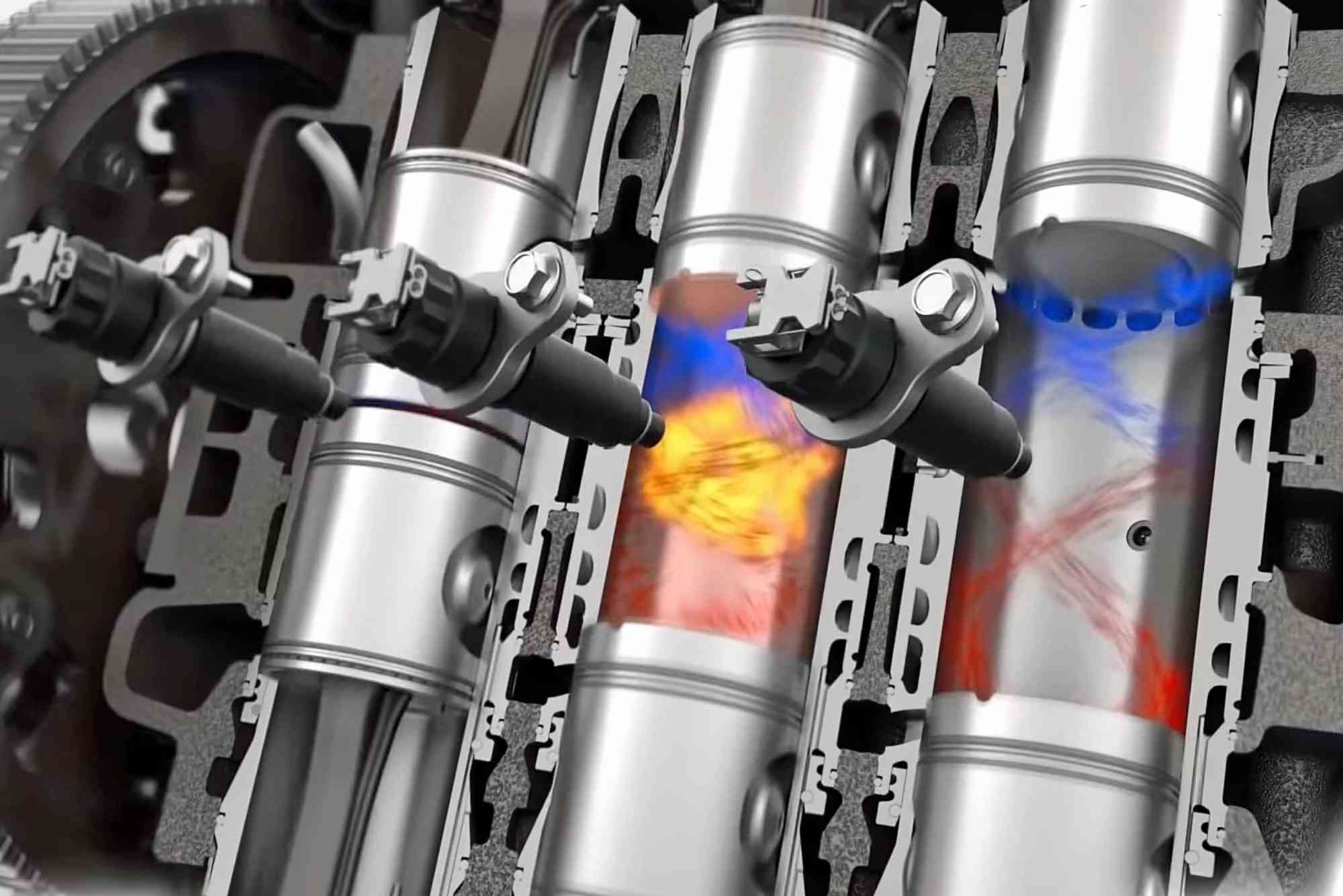
An opposed piston engine is an internal combustion engine that uses two pistons per cylinder. Each piston moves toward the other during the compression stroke and away during the power stroke. Instead of using a traditional cylinder head, the pistons form the combustion chamber between them. When the air-fuel mixture ignites, the opposing pistons move apart, transferring power to separate crankshafts or a single crankshaft through connecting rods and gears.
This system offers a unique advantage: it eliminates the heavy cylinder head and the need for complex valve systems. By using ports for intake and exhaust, it ensures smoother airflow and better thermal efficiency. This leads to higher power output with fewer moving parts, making the opposed piston engine both efficient and durable.
How Does an Opposed Piston Engine Work?
The working principle of an opposed piston engine may seem complex at first, but it follows the same basic four-stroke or two-stroke combustion process found in conventional engines. The main difference lies in the movement of two pistons inside one cylinder.
The Intake and Compression Strokes
In a typical two-stroke opposed piston engine, one piston controls the intake ports while the other controls the exhaust ports. As the pistons move outward, air enters the cylinder through the intake ports. When they move inward, the air is compressed between the piston heads. This compression phase raises the temperature and pressure inside the combustion chamber, preparing the mixture for ignition.

Combustion and Power Delivery
When fuel is injected into the highly compressed air, it ignites spontaneously, especially in diesel variants. The combustion forces both pistons outward, generating power simultaneously in opposite directions. Each piston transmits this energy to its crankshaft. The crankshafts are usually geared together to combine the power output into a single rotational motion, driving the engine’s output shaft.
Exhaust Phase
As the pistons continue to move outward, one set of ports opens to release the exhaust gases while the other allows fresh air to enter, creating a natural scavenging effect. This efficient gas exchange process is one reason opposed piston engines can achieve superior fuel efficiency compared to conventional engines.
Advantages of the Opposed Piston Engine
The opposed piston engine is not just a mechanical curiosity; it offers several significant advantages over traditional designs. Engineers and manufacturers are drawn to it for its simplicity, performance, and environmental benefits.
Higher Thermal Efficiency
One of the most compelling benefits of the opposed piston engine is its thermal efficiency. Because there is no cylinder head, heat loss is minimized during combustion. The symmetrical design also provides a more uniform temperature distribution, reducing energy waste and improving fuel economy.
Compact and Lightweight Design
Without the heavy cylinder heads and valve mechanisms, the opposed piston engine is more compact and lighter than equivalent power conventional engines. This makes it ideal for applications where space and weight are critical, such as aircraft, military vehicles, and electric-hybrid powertrains.
Fewer Moving Parts
Conventional engines require camshafts, valves, and complex timing systems. In contrast, opposed piston engines rely on ports and synchronized crankshafts, which simplifies construction and maintenance. Fewer moving parts also mean less friction and wear, leading to longer service life.
Improved Combustion Efficiency
The opposed piston configuration allows for a more complete and balanced combustion process. The symmetrical piston motion reduces hotspots and detonation risks, which enhances performance and reduces emissions. This makes opposed piston engines a strong candidate for meeting modern environmental standards.
Reduced Emissions
With better fuel-air mixing and complete combustion, these engines produce fewer unburned hydrocarbons and nitrogen oxides (NOx). As industries shift toward greener solutions, this cleaner-burning technology aligns perfectly with global sustainability goals.
Disadvantages and Challenges
While the opposed piston engine design offers many advantages, it also faces certain engineering and practical challenges. Understanding these helps explain why the technology has not yet become mainstream.
Complex Crankshaft Synchronization
The engine’s dual-crankshaft system requires precise synchronization to ensure the pistons move in harmony. This adds mechanical complexity and demands high-quality gearing systems, which can increase manufacturing costs.
Lubrication and Cooling Issues
Managing heat and lubrication between two opposing pistons can be difficult. The compact design makes it harder to distribute oil evenly or remove excess heat, requiring specialized cooling systems to maintain reliability.
Limited Widespread Adoption
Despite its potential, few automotive manufacturers have adopted opposed piston engines for mass production. The lack of existing infrastructure and the dominance of traditional engine manufacturing make large-scale integration slower.
Applications of the Opposed Piston Engine
The opposed piston engine has been used in various sectors throughout history and is now finding new relevance in modern applications.
Military and Marine Use
During the early and mid-20th century, opposed piston engines powered submarines, tanks, and aircraft. Companies like Junkers and Fairbanks-Morse developed robust versions that could withstand extreme conditions and operate reliably over long periods.
Modern Automotive Innovations
In recent years, startups and research firms have revived the concept for modern use. Companies such as Achates Power are developing opposed piston engines for passenger vehicles and trucks, claiming up to 30% better fuel efficiency compared to conventional diesel engines.
Hybrid and Electric Powertrains
As the automotive industry transitions toward hybrid and electric solutions, the opposed piston engine offers a compact, efficient range-extender option. Its smaller size and reduced emissions make it suitable for modern hybrid-electric vehicles seeking balance between performance and sustainability.
Aerospace and Power Generation
The lightweight and efficient nature of opposed piston engines also makes them suitable for aerospace and stationary power generation. Their ability to produce high power from a compact unit helps reduce fuel consumption in both ground and air-based operations.
The Future of the Opposed Piston Engine
The renewed interest in opposed piston engines is driven by the global need for cleaner, more efficient energy solutions. As fuel efficiency regulations tighten and carbon emission targets become stricter, this design offers a viable bridge between traditional combustion and fully electric technologies.
Researchers continue to experiment with advanced materials, digital control systems, and hybrid configurations to overcome previous limitations. Future versions may use renewable fuels or integrate with electric systems to achieve near-zero emissions. The opposed piston engine could therefore play a crucial role in extending the life of internal combustion technology while supporting the transition to cleaner alternatives.
(FAQs)
What is the purpose of an opposed piston engine?
The opposed piston engine’s purpose is to improve combustion efficiency and reduce heat loss by using two pistons per cylinder, moving in opposite directions.
Why did opposed piston engines fall out of use?
They became less common due to mechanical complexity, synchronization challenges, and the dominance of simpler four-stroke designs. However, modern technology is solving these issues.
Are opposed piston engines more efficient?
Yes, they are more thermally efficient because they have no cylinder heads, reducing heat loss and improving fuel economy by up to 30%.
Who makes opposed piston engines today?
Companies like Achates Power and Cummins are developing modern opposed piston engines for automotive and industrial use.
Can opposed piston engines run on alternative fuels?
Yes, they can operate on diesel, gasoline, or renewable fuels such as biofuels, making them adaptable for future energy systems.
The opposed piston engine represents a remarkable step forward in mechanical design and efficiency. By removing the need for a cylinder head and improving the combustion process, it delivers higher performance with fewer parts and lower emissions. As industries look for greener and more efficient solutions, this technology offers a bridge between traditional engines and the sustainable power systems of tomorrow.
Its compact design, superior fuel economy, and adaptability make it a strong candidate for future applications in transportation, defense, and power generation. The opposed piston engine is not merely a historical innovation but a renewed symbol of engineering progress.