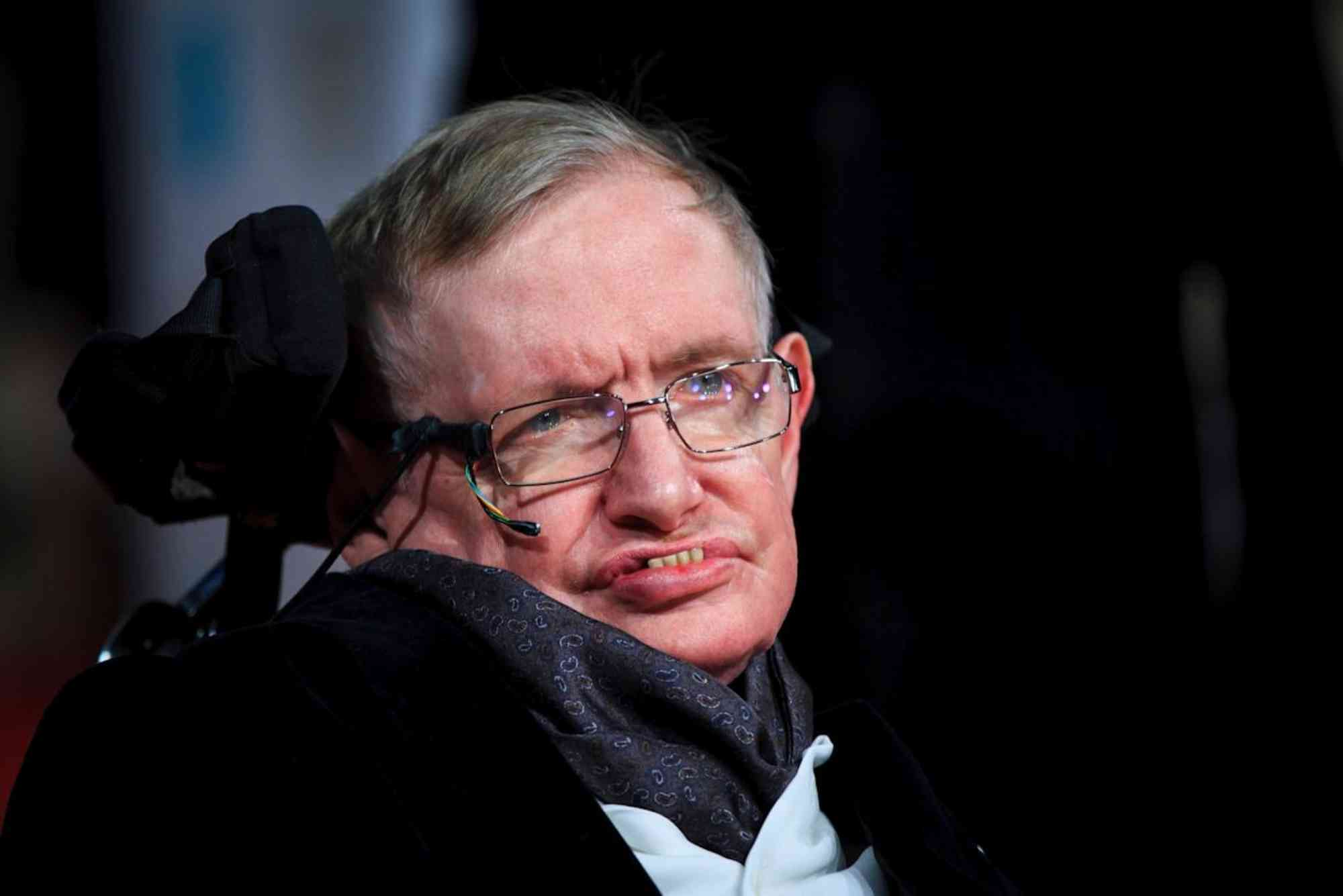
Few names in modern science evoke as much admiration as Stephen Hawking. Known for his groundbreaking work in cosmology and theoretical physics, Hawking’s mind reshaped our understanding of the universe. Yet behind the genius was a remarkable journey through education—one defined not only by brilliance but also by resilience and curiosity. Understanding Stephen Hawking’s education helps us see how a young boy with a love for science became one of the most influential thinkers in human history.
Early Foundations: The Making of a Curious Mind
Stephen Hawking was born on January 8, 1942, in Oxford, England, to parents deeply invested in learning. His father, Frank Hawking, was a medical researcher, while his mother, Isobel Hawking, had studied philosophy, politics, and economics. Their household valued knowledge and discussion, creating an environment where questions were encouraged and curiosity was celebrated.
From an early age, Hawking showed an unusual fascination with how things worked. While other children might have been content playing games, he was known for dismantling toys to understand their mechanisms. His parents often remarked on his intense curiosity—a trait that became the cornerstone of his intellectual journey.
Stephen’s family moved to St Albans when he was eight, where he attended St Albans High School for Girls for a short period—since boys under ten were accepted at that time—and later St Albans School, one of England’s oldest educational institutions. It was here that Hawking’s love for mathematics and science began to take shape. Although not immediately recognized as a prodigy, his teachers saw potential in his methodical and persistent approach to problem-solving.
School Years: A Blend of Modesty and Determination
At St Albans School, Stephen Hawking’s education became a blend of exploration and self-driven study. He was not the top of his class, but his intellectual curiosity set him apart. He preferred thinking about the “why” behind scientific phenomena rather than memorizing facts. His classmates affectionately nicknamed him “Einstein,” recognizing his deep interest in the universe and his tendency to ask profound questions that went beyond the curriculum.
Mathematics soon became Hawking’s favorite subject. However, his father hoped he would pursue medicine—a more practical and stable field at the time. Despite the family’s differing opinions, Hawking remained firm in his love for physics and math. This early determination revealed a defining aspect of his personality: his willingness to follow his intellectual instincts regardless of expectations.

During his teenage years, Hawking developed an interest in building things. He and a few school friends built rudimentary computers using recycled parts, a project that showcased both creativity and innovation. These early experiments in logic and design mirrored the kind of abstract thinking he would later apply to cosmology.
University College, Oxford: Nurturing a Theoretical Mind
In 1959, at just 17, Stephen Hawking won a scholarship to University College, Oxford, to study physics. Although he wanted to specialize in mathematics, the college did not offer that degree, so physics became his focus. This decision proved crucial in shaping his intellectual path.
At Oxford, Hawking initially found the academic environment less demanding than expected. He often completed his work quickly and spent more time socializing or rowing with the college boat club. However, beneath this relaxed exterior was a mind constantly questioning the laws of nature. He thrived in discussions and debates about cosmology, particularly topics related to relativity and quantum mechanics.
Despite his casual approach to coursework, Hawking’s final examination results were exceptional. His performance was on the borderline between first- and second-class honors. When asked during his oral exam about his ambitions, he confidently replied that if his examiners awarded him a first, he would go to Cambridge for graduate work. He received that first-class degree, paving the way for the next monumental step in his academic life.
Cambridge: Where Genius Met the Universe
In 1962, Hawking entered Trinity Hall, Cambridge, for his PhD in cosmology—a field still in its formative years. He was supervised by Dennis Sciama, one of the leading theoretical physicists of the time. Sciama’s influence helped refine Hawking’s understanding of cosmology, particularly the large-scale structure of the universe.
It was during his first year at Cambridge that Hawking’s life took a dramatic turn. He began experiencing symptoms of what would later be diagnosed as amyotrophic lateral sclerosis (ALS), a degenerative motor neuron disease. Doctors initially gave him only a few years to live. For many, such a diagnosis might have ended their academic journey. For Hawking, it ignited a new kind of determination.
Even as his body weakened, his mind grew sharper. His research began focusing on black holes and the origins of the universe—questions that demanded both creativity and mathematical rigor. His ability to visualize complex physical concepts mentally, without the aid of writing or diagrams, became legendary among peers and professors.
Hawking’s doctoral thesis, titled Properties of Expanding Universes, marked the beginning of his groundbreaking contributions to cosmology. In it, he explored the implications of Einstein’s general theory of relativity on the structure of the cosmos. This work laid the foundation for his later theories about singularities and black holes—concepts that would transform modern physics.
Pushing Boundaries: From Student to Scholar
After earning his PhD in 1966, Stephen Hawking remained at Cambridge as a researcher at Gonville and Caius College. His reputation quickly grew. Despite his physical limitations, his intellectual capacity seemed limitless. He challenged existing assumptions in cosmology, arguing that the universe had a definite beginning—a concept that supported the Big Bang theory.
During this period, Hawking developed the singularity theorems with Roger Penrose, demonstrating that space and time would have a beginning in the Big Bang and an end inside black holes. This collaboration was a testament to his ability to think beyond conventional frameworks, a skill nurtured through years of disciplined study and curiosity-driven learning.
In 1974, Hawking proposed what is now known as Hawking radiation—the idea that black holes can emit energy and eventually evaporate. This concept merged quantum theory, relativity, and thermodynamics, three pillars of modern physics that had previously seemed incompatible. It was a stunning leap of thought that redefined how scientists understood the cosmos.
The Role of Education in Shaping Hawking’s Legacy
When reflecting on Stephen Hawking’s education, it’s clear that his brilliance did not emerge in isolation. Each stage of his learning journey—from his inquisitive childhood to his transformative years at Oxford and Cambridge—played a crucial role in shaping his intellectual identity.
His education was not about memorizing formulas or chasing grades; Stephen Hawking Education it was about nurturing curiosity and critical thinking. Hawking’s teachers and mentors encouraged exploration rather than perfection. That open-minded approach gave him the freedom to question established theories and pursue the mysteries of the universe with boldness.
Moreover, his perseverance in the face of adversity demonstrated the true purpose of education: to strengthen not only the mind but also the spirit. His life reminds us that intellectual achievement is not merely the result of natural talent but of continuous learning, resilience, and imagination.
Lessons from Stephen Hawking’s Educational Journey
Stephen Hawking’s academic path offers valuable insights into what it means to be educated. True learning, as his life shows, is not confined to classrooms or textbooks. It is a lifelong pursuit shaped by curiosity, discipline, and the courage to challenge limits.
His story encourages students to embrace difficulty as part of growth. Hawking faced immense physical challenges, yet he continued to teach, write, and share his discoveries with the world. His best-selling book A Brief History of Time became a symbol of his belief that complex knowledge could be made accessible to everyone.
Frequently Asked Questions
How was Stephen Hawking educated?
Stephen Hawking was educated at St Albans School, University College Oxford, and Trinity Hall, Cambridge, where he earned his PhD in cosmology.
What subject did Stephen Hawking study?
He studied physics at Oxford and specialized in cosmology and general relativity during his postgraduate studies at Cambridge.
Did Stephen Hawking enjoy school?
While not a top student in his early years, Hawking enjoyed learning and was passionate about science and mathematics. His love for problem-solving often went beyond what was taught in class.
What degree did Stephen Hawking get from Oxford?
Hawking earned a first-class honors degree in physics from University College, Oxford, in 1962.
How did Stephen Hawking’s education influence his career?
His education at Oxford and Cambridge provided the foundation for his revolutionary work on black holes, cosmology, and the nature of time. His academic mentors and environment fueled his lifelong curiosity and resilience.
A Legacy Built on Learning
Stephen Hawking’s education was far more than a sequence of degrees—it was the framework upon which his scientific legacy was built. Every stage of his learning journey shaped his ability to think differently, question deeply, and persist against impossible odds.
His story reminds us that education is not simply about knowledge accumulation but about nurturing the courage to explore the unknown. Hawking’s example continues to inspire students, scientists, and dreamers around the world to look up at the stars and ask the big questions.